Arkansas Dentistry & Braces patients know how to have some fun! For all of you Pokémon GO fans, Dr. Burris found a great article with a few tricks to help you step up your game. Read the article here!
Arkansas Dentistry & Braces patients know how to have some fun! For all of you Pokémon GO fans, Dr. Burris found a great article with a few tricks to help you step up your game. Read the article here!

Arkansas Dentistry & Braces is proud to give back to the communities we serve. You can book our Snow Cone Truck for your next school, church or fundraising event! You can get more information or reserve the truck for your event here! It’s a great way to add some fun to your event!

Arkansas Dentistry & Braces has an all-star team! We call our team of professionals the Smile Squad. The Smile Squad is determined to make sure you get an amazing smile, but also have a little fun while visiting our office. Visit our Facebook page to learn more and to see the Arkansas Dentistry & Braces Smile Squad in action!
Your children’s morning and evening routines likely include the brushing of their teeth—either by you or by them—but are their teeth getting flossed as well?
Flossing your children’s teeth is important because it removes all the little bits of food between teeth that brushes can’t reach. And flossing is not as hard as you might think, especially if you use a little plastic tool called a floss threader.
Let Dr. Burris and his daughter Berkeley show you how it’s done.
Some key tips of the video:

If you asked your grandparents about what braces were like in the good old days, they would tell you those days weren’t so good.
Although rudimentary orthodontics have been around for a long time, straightening teeth only became a professional endeavor in the twentieth century. If your grandmother had braces in the 1940s, they were probably made of gold, because its softness made it malleable. But that softness meant frequent visits to the orthodontist for painful readjustments. And gold was more expensive than it is today.
In the 1950s, wearing braces became really popular, even a status symbol. Check out pictures in high school yearbooks from those days, and you can count dozens of metal mouths. Typical braces were thick bands of stainless steel that wrapped completely around each tooth, covering most of the enamel. Just a thin, white sliver of teeth showed above the band, and brushing those bands and wires was a laborious task. Wires loosened easily, and patients had to go at least once a month to the orthodontist for painful tightening. What’s worse, treatment times were often 4 to 8 years, while today most patients wear braces for 1 to 3 years.
Why were treatment times so long? Orthodontists didn’t have good diagnostic tools. They were just beginning to use X-rays, but even with them, doctors had to do a lot of guesswork. They used rulers and protractors to make drawings and plan their work, cutting and pasting images that they thought would fit an individual’s face structure. Because they were operating on educated guesses, they frequently had to make adjustments to their plans. Now, orthodontists have in their diagnostic arsenal panoramic X-rays, moldings of bite impressions, 3-D modeling and other sophisticated tools. These allow them to create a predictable treatment plan.
Back then, orthodontists extracted new permanent teeth when there was no space for them to grow straight in the patient’s mouth. Braces couldn’t create space, so removal was the only solution. Today, if a child is first evaluated at a young age (7 to 9) when facial bones are more plastic, the orthodontist can use a variety of devices to widen or reshape the dental arch so that the patient can retain all of his or her permanent teeth.
In the old days, rubber bands were frequently used to attach braces on the upper teeth to those on the lower. Shaped like tiny miniature doughnuts, the user would struggle to get them on and they would often pop off in the process, flying across the room, or they would break when stretching them to fit onto the braces. Patients back then had to carry packages of rubber bands to be sure they had enough, and they had to be removed to eat and then new ones put on.
Today, there are no more rubber bands, no more night-time head gears which held retainer type devices in place. Bands no longer cover teeth. They are much smaller, lighter in weight and come in many colors. Other modern options include lingual braces that attach to the teeth on the inside of the mouth or Invisalign, clear removable aligner trays that are changed every two weeks.
Wires are no longer stainless steel. They are typically heat-activated nickel titanium that warm to body temperature as they move teeth in anticipated directions. They don’t need adjustment as frequently as steel wires.
When it comes to orthodontics, things have improved a lot since the time grandma and grandpa were young. Braces now are less noticeable, offer greater comfort, need fewer orthodontic adjustments, and work more quickly.
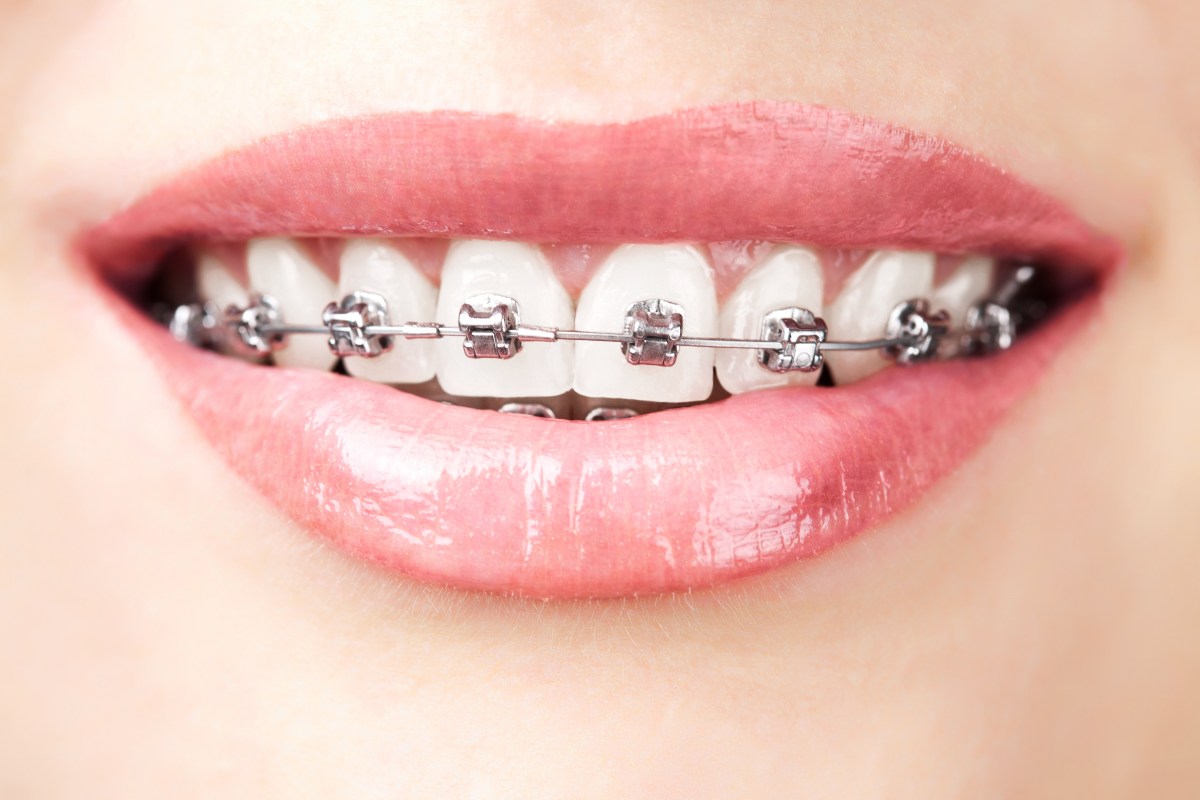
“I have had braces for about two years. I admit that about 70 percent of the days I’ve had them I haven’t brushed more than once a day,” a teenager says in an online forum. He goes on to wonder if he can hold off tooth decay if he were to brush more often. If he came to us, we’d tell him that the answer is “yes,” but there’s also more he could do.
Since food gets stuck in unseen places on teeth when braces surround them, cleaning teeth requires both frequency and special tools. Here are some suggestions:
The type of food you eat can also increase the likelihood of decay as well as damage your braces. Any food high in sugar or starch can cause decay. Especially, avoid eating the following:
Eating hard foods like apples, corn on the cob, and carrots can break your braces. Still, they can be part of a healthy diet, so cut them into small pieces so you don’t have to bite down hard.
If you have additional questions about how to care for your teeth, feel free to ask us when you’re in for your next appointment.

When you have braces, you have to be more careful about what you eat, but you don’t have to let your braces ruin your Halloween fun. Whenever you encounter a bag or bowl of candy, the general rule is the softer the candy, the better. Can it melt in your mouth? OK to eat.
Keep in mind that braces are affixed with a special type of orthodontic glue, and when you work the powerful muscles of your jaw to break apart hard candies, it can cause braces to pop off. Braces are also sort of fragile in their own way, and the strong impact of intense crunching can damage the brackets.
And you should avoid sticky, chewy candies (even if they’re soft). They aren’t always hard to chew, but they can get stuck in your brackets, making your braces hard to clean and fostering tooth decay.
Here’s a partial list to keep in mind:
Fine to eat
Give away or trade
Even with the OK-to-eat candies, you don’t want that sugar clinging to your brackets for long. Be sure to brush soon after you eat anything sweet, and enjoy your holiday!
No one wants to look in the mirror and see food caught in their teeth. It can be embarrassing. But keeping food from getting stuck in your teeth isn’t just about maintaining appearances. A clean mouth means a healthy mouth. With proper oral hygiene, you’ll avoid the build up of plaque, discoloration, gingivitis and other problems.
When you first get braces, you’ll find that cleaning your mouth is harder because the brackets and wires make access to trapped food more difficult, especially near the gum line. At the same time, it’s even more important than ever to keep up with cleaning when you’re in braces. If you don’t, your treatment time could take longer. In a worst-case scenario, a patient can develop gum disease. When this happens, the braces must come off temporarily to let gums heal and their condition improve. Only then can the braces be put back on and treatment resume.
Did that scare you enough? But there’s no need to be worried. It’s actually not all that hard to maintain dental hygiene when you’re in orthodontic treatment. Here are our tips to keep you on top of your game:
1. Eat right and avoid junk
There are foods that are good for your teeth’s enamel like cheese, milk, meat, and chicken, so eat these often. And eating lots of vegetables is always a good idea. The worst foods for your teeth are those high in sugar, so avoid sugary drinks and candy. Especially stay away from hard or chewy candy that can crack your brackets or get stuck in them.
2. Brush often
Aim to brush your teeth four times a day, after each meal and just before bed. With braces, however, you must develop some new techniques. First brush your brackets straight on, then from an upper angle and then again from a lower angle. You can buy a tool called a proxa brush with bristles in a cone shape to help you target brushing in hard-to-reach areas.
3. Floss daily
You won’t be able to use normal floss when your teeth are in braces, but drugstores sell floss threaders with a stiffened end. You can push the end underneath the wire so you can reach your gumline.
4. Use a rinse
Even with dedicated brushing and flossing, you are unlikely to clean every small area where food and biofilm can hide. So make a habit of swishing at night with a fluoride rinse.
5. Keep your appointments
Naturally, you’ll do this anyway, but in addition to checking on the progress of your treatment, we can check for any signs of incipient gum disease. And while you’re in the chair, you can discuss any issues you might be having with keeping your braces clean, and we can recommend or prescribe extra products or rinses.
Three Ways to Protect Your Braces When Playing Sports – Arkansas Braces
Getting braces at Arkansas Braces in Fort Smith, AR doesn’t mean you have to give up your athletic activities, but it does mean you need to be a little more careful about them. A hard hit in a football game can lead to a popped-off bracket, a cut wire, and damage to your teeth or the inside of your mouth. And a really hard hit can dislodge a tooth or two. Even an impact in a less intense sport than football—say baseball, softball or even tennis—can harm your braces and your mouth.
If you play sports, you should look into these three ways to protect your braces from Arkansas Braces and your mouth:
Full-Facial Guard
A full-facial guard is the hard plastic piece that juts out in front of the mouth on football, hockey, and lacrosse helmets. If you wear braces, be sure to wear a helmet when you play rough contact sports (and even if you don’t wear braces, wearing a helmet provides general head safety). While a full-facial guard will protect your mouth from external impact, collisions and tackles can still cut the inside of your mouth or damage braces.
Mouth Guards
Mouth guards are made to absorb and disperse the shocks that come from collisions with other players, balls hitting your face, and falls to the ground. They are worn inside your mouth to fit directly over your upper teeth, and you can find some dual-arch models that are designed to fit over your lower teeth as well. There are many different types of mouth guards available at just about any sporting goods store. They should be used for sports like soccer, basketball, baseball, and volleyball. They are also a good idea for non-contact sports like gymnastics, biking, and skateboarding where a fall can still harm your mouth.
The Arkansas Braces team reminds you to make sure your mouth guard fits well, is comfortable and allows you to breathe. We don’t recommend the “boil-and-bite” type for our patients that wear braces, because these mouth guards can stick to brackets and pull them off when removed. Ask us during your next visit for specific advice about what mouth guard we recommend for your particular sport or to judge how well a recent purchase fits.
Dental Silicone or Wax
Dental silicone comes in long strips that you cut to size and press into your braces. A good brand is OrthoSil Silicone Dental “Wax” (which is not really made of wax). Dental silicone is a great way to supplement protection when you’re wearing a helmet with a full-facial guard. You can use the strips to protect the inside of your mouth during other athletic activities where an impact can cut your mouth or damage your braces. Depending on your preferences, you might favor actual dental wax or a product called Gishy Goo.
The team at Arkansas Braces in Fort Smith, AR hopes these tips help you have a safe and fun sports season!
Braces can make your teeth feel sore, especially when you first get them or when they’re tightened. That’s one reason you’ll need to adjust your diet when in treatment. Anything crunchy can make sore teeth feel worse. Really hard foods or foods that strain your teeth (like when biting into an apple) can make brackets pop off. You’ll also need to avoid sticky foods because they get stuck in your braces and cause tooth decay.
For summer, that might seem like a bummer. Favorite summertime foods like ice cream cones, amusement-park taffy, and corn on the cob are out for the time being. But still, there are lots of summer foods that you can still enjoy. Arkansas Braces put together a few recipes.
The team at Arkansas Braces in Fort Smith, AR hopes you enjoy all of these delicious treats while wearing braces. We look forward to seeing you at your next braces appointment in Fort Smith, AR.
 Arkansas Dentistry & Braces